Hey there! I’m a supplier of complex parts, and I often get asked this question: Can complex parts be mass-produced? Well, let’s dive right into it. Complex Parts
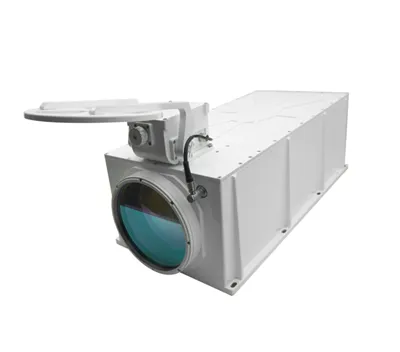
First off, what exactly are complex parts? These are parts that have intricate designs, multiple features, and tight tolerances. They’re not your run-of-the-mill components. Think of things like aerospace engine parts, medical device components, or high – precision automotive parts. These parts require a high level of expertise and advanced manufacturing techniques to produce.
Now, the big question: Can they be mass – produced? The short answer is yes, but it’s not as straightforward as mass – producing simple parts.
One of the main challenges in mass – producing complex parts is the design. Complex parts often have unique geometries and features that need to be carefully considered. For example, if you’re making a part with internal channels or thin walls, you need to ensure that the manufacturing process can handle these features without compromising the part’s integrity. This means that the design has to be optimized for mass production from the start. You can’t just take a design that was made for a one – off prototype and expect it to work well in a mass – production setting.
Another challenge is the manufacturing process itself. Traditional manufacturing methods like machining can be time – consuming and expensive when it comes to complex parts. For mass production, you need to find more efficient processes. One option is injection molding. This process is great for producing complex plastic parts in large quantities. You create a mold based on the part’s design, and then you inject molten plastic into the mold. Once the plastic cools and solidifies, you get a part that’s an exact copy of the mold. It’s fast, and you can produce a large number of parts in a relatively short time.
But injection molding isn’t suitable for all materials. For metal parts, processes like die casting or powder metallurgy can be used. Die casting involves forcing molten metal into a mold under high pressure. It’s a fast process that can produce parts with high precision. Powder metallurgy, on the other hand, involves compacting metal powder into a desired shape and then sintering it to form a solid part. This process is great for creating parts with complex shapes and can be cost – effective for mass production.
Quality control is also a crucial aspect of mass – producing complex parts. Since these parts often have tight tolerances, even a small deviation can render the part useless. You need to have a robust quality control system in place to ensure that every part meets the required specifications. This can involve using advanced inspection techniques like coordinate measuring machines (CMMs) to measure the dimensions of the parts accurately.
Cost is another factor to consider. Mass – producing complex parts can be expensive, especially in the initial stages. You need to invest in the right equipment, tools, and molds. However, as the production volume increases, the cost per part tends to decrease. This is known as economies of scale. So, if you have a large enough order, mass – producing complex parts can be cost – effective in the long run.
Let’s talk about some real – world examples. In the aerospace industry, there’s a high demand for complex parts like turbine blades. These blades have complex airfoil shapes and need to be made from high – strength materials to withstand the extreme conditions inside an engine. Manufacturers use advanced manufacturing techniques like investment casting to mass – produce these blades. Investment casting involves creating a wax pattern of the blade, coating it with a ceramic shell, melting the wax out, and then pouring molten metal into the shell. This process allows for the production of highly detailed and accurate turbine blades in large quantities.
In the medical device industry, complex parts like surgical instruments and implantable devices are mass – produced. For example, orthopedic implants need to be customized to fit the patient’s anatomy. However, with the use of advanced manufacturing technologies like 3D printing, these implants can be mass – produced with a high level of precision. 3D printing allows for the creation of complex geometries that would be difficult or impossible to achieve with traditional manufacturing methods.
So, as you can see, complex parts can definitely be mass – produced. It just requires the right combination of design, manufacturing processes, quality control, and cost management.
If you’re in the market for complex parts and are thinking about mass production, I’d love to have a chat with you. I’ve got the experience and the expertise to help you find the best solution for your needs. Whether it’s choosing the right manufacturing process, optimizing the design for mass production, or setting up a quality control system, I can assist you every step of the way.
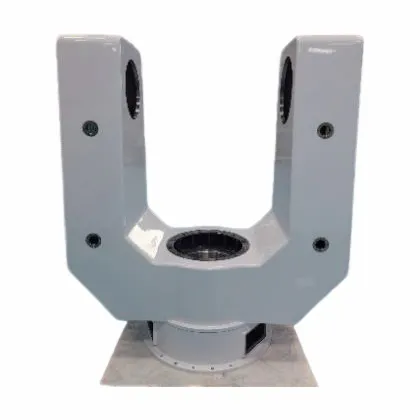
Contact me to start a discussion about your complex part requirements. Let’s work together to make your mass – production project a success.
Complex Parts References:
- "Manufacturing Engineering and Technology" by Serope Kalpakjian and Steven R. Schmid
- "Introduction to Manufacturing Processes" by Rajender Singh
Xi’an Zhongke Lead Ir-Tech Co., Ltd.
We are one of the most experienced complex parts manufacturers in China, specialized in providing high quality OEM products with the industrial grade. We warmly welcome you to wholesale high performance complex parts at an affordable price from our factory.
Address: Building 8,Hard Technology Enterprise Community No.3000,Biyuan 2nd Rd,High-Tech Zone Xi’an,Shaanxi,China
E-mail: sales@lead-ir.com
WebSite: https://www.leadinfrared.com/
