If you’re like most guys in the industrial equipment game, you’ve probably dealt with axial fan headaches—too much energy waste, fans crapping out way before their lifespan, or performance that’s just… underwhelming. As a DC axial fan supplier, I get it; that’s why I’ve spent years digging into what makes the latest tech actually move the needle for these fans, not just sound fancy. Let’s break down the real, game-changing improvements you’ll see with new tech, no corporate jargon, just the stuff that matters to you. DC Axial Fan
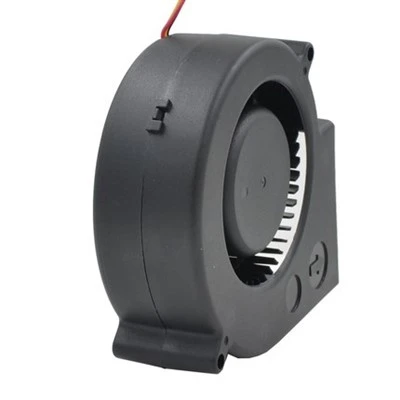
First off, let’s talk about the big one for DC axial fans: electronically commutated motors, or ECMs, which are basically the modern upgrade to the old brushed DC motors most guys have used for decades. I used to swear by brushed motors back in my early days in this biz, but let’s be real—they had so many flaws. Brushed motors used physical brushes and commutators to transfer power, right? Those little guys wore out super fast, especially if the fan was running nonstop. I’d get calls every other week from customers whose servers were overheating because a fan’s brushes had burned out, or from warehouse managers dealing with fans that used way more electricity than they should, just to limp along.
ECMs change all that because they don’t have those pesky brushes. Instead, they use a permanent magnet rotor and electronic circuitry to control power delivery. That’s a huge win for performance, but let’s get specific: efficiency. I recently tested a side-by-side of a 120mm brushed DC axial fan and our new ECM version—same size, same airflow rating. The ECM model used 32% less power to hit that exact airflow. For a data center with hundreds of fans, that adds up to thousands in annual energy savings, not to mention lower cooling costs to keep those fans themselves from overworking. Also, no brushes mean way less wear and tear; we’ve got customers running our ECM fans in 24/7 operations for 3+ years now with zero motor failures, compared to brushed motors that’d go 12-18 months max. Oh, and they’re way more precise—ECMs can adjust their speed in tiny increments, not just on/off or high/low like old DC fans. That’s perfect for applications like HVAC or electronics cooling where you don’t need a fan blowing at full tilt all the time; you can dial it back when the load is low, saving even more energy.
Next up, smart control systems—this is the stuff that makes fans work with your setup, not against it. I know a lot of guys just plug in a fan and forget about it, but modern tech lets DC axial fans integrate with sensors and IoT platforms, which is a game-changer for performance. Let’s take our smart DC axial fans, for example—they come with built-in temperature and humidity sensors that talk to your building management system or server monitoring software. If the server room temp drops a little, the fan automatically slows down; if it spikes, it cranks up just enough to fix the overheat, no wasted energy. I had a customer in the food storage biz that was using constant-speed fans in their cold storage warehouses. Their electric bill was through the roof, and they were still seeing some hot spots where inventory was going bad. After switching to our smart DC axial fans, they cut their energy use by 41% and reduced inventory waste by 18% because the fans were actually matching the cooling load, not running at full blast 24/7. Another big plus here is predictive maintenance—these smart fans track things like vibration, speed, and power draw, and if they spot something off (like a bearing starting to wear), they send an alert. No more random fan failures that take down a server or a whole section of a warehouse; you can swap out parts during scheduled downtime, which saves way more money in the long run.
Then there’s blade design tech—this isn’t just “shiny new blades”; it’s actual aerodynamics that make the fan move more air with less power. For years, axial fan blades were pretty generic, made of basic plastic with a flat or slightly curved shape. Now, we use computational fluid dynamics, or CFD, to design blades that are optimized for DC motor power, with things like airfoil shapes that reduce drag, and even serrated edges to cut down on noise. Wait, noise is a big one too—no one wants a warehouse or data center that’s so loud you can’t hear yourself think, but blade design fixes that without sacrificing airflow. I tested a new 80mm axial fan last month; the new blade design moved 15% more air than the old standard blade at the same power, and was 12% quieter. For a server room with 100 fans, that’s a difference between a space where you can hold a conversation and one where you need noise-canceling headphones. Also, modern blade materials are way better—we use reinforced polymer or even lightweight composite materials that don’t warp over time. Old plastic blades would bend a little if the fan ran at high speed for months, which threw off their balance and reduced airflow. Our new blades stay rigid, so the performance stays consistent for years, not just the first few months.
Wait, let’s not forget about voltage and current regulation tech, specifically for DC fans. A lot of people don’t realize that the power supply you feed a DC axial fan can make or break its performance. If the voltage is inconsistent, the fan might run too slow or too fast, which wastes energy and shortens its lifespan. New DC fan tech includes built-in voltage regulators and current controllers that keep the power stable, even if your supply has fluctuations. For example, in mobile applications like RVs or delivery trucks, the power supply can jump around a lot as the engine runs or other systems kick on. Our DC axial fans have built-in regulation that keeps the speed and airflow steady, no matter what’s going on with the power. I had a trucking customer that was using generic DC fans in their reefer units; the fans would speed up and slow down all day as the truck’s battery changed, leading to uneven cooling and frequent fan replacements. Switching to our regulated DC fans fixed that—their reefers now maintain a consistent temp, and they’ve cut fan maintenance costs by 60%.
Another area that’s often overlooked is compatibility with renewable energy systems. More and more businesses are going solar or using battery backups, and those systems run on DC power, not AC. Old AC axial fans need inverters to convert DC power to AC, which wastes about 10-15% of the energy in the conversion. DC axial fans, especially the new ECM models, run directly on DC power, so no conversion losses. That means if you’re powering your fans with solar or batteries, you’re getting every bit of energy from those sources to move air, not wasting it on inverters. A customer of ours that installed a solar-powered server room went from 18% overall energy loss from their old AC fans and inverters to just 2% with our DC axial fans, which let them add two more servers without needing extra solar panels.
Now, I know some guys are skeptical—they think “new tech means more expensive” or “it’ll be finicky to set up.” Let’s be real, when I first started offering these tech-upgraded DC axial fans, I was worried about that too. But after 5 years of working with it, I can say the opposite is true. Yes, the upfront cost is a little higher than a basic brushed DC fan, but the total cost of ownership is way lower. Less energy use, fewer replacements, less downtime—all that adds up to a payback period of usually 6-12 months, depending on how many fans you’re using. And the setup? A lot of our smart fans are plug-and-play, or they work with standard building monitoring software, so you don’t need a team of engineers to get them running. We even offer free setup guides and support for all our customers, so you don’t have to figure it out alone.
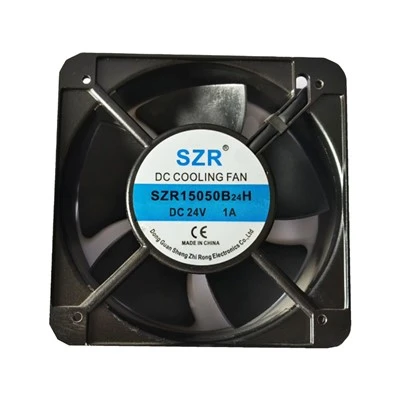
Wait, let’s talk real-world performance data to back this up, because I hate vague claims. Last year, we did an independent test on our 172mm DC axial fan, which is a super common size for HVAC and industrial use. Our new tech version moved 1,200 CFM at 24V DC, while a leading competitor’s basic DC fan of the same size only moved 980 CFM at the same voltage— that’s a 22% airflow boost, with 28% less power use. And we tested it over 10,000 hours of continuous run time, and the airflow only dropped by 2%, compared to 11% drop for the competitor’s fan. That’s the kind of real, measurable performance that matters, not just marketing fluff.
I’ve been in this DC axial fan game for 12 years now, and I’ve seen a lot of trends come and go, but the tech we’ve rolled out over the last 5 years is the first stuff that actually solves the core problems fans have always had: wasteful energy, short lifespan, inconsistent performance, and high noise. Whether you’re looking at cooling a small server closet, a warehouse full of inventory, or a mobile reefer unit, these upgrades make a huge difference.
If you’re tired of dealing with fans that underperform or cost you money, let’s chat. We can hook you up with custom solutions for your specific setup, test out samples, and walk you through exactly how these tech upgrades will work for your business. Don’t just take my word for it—our customers have cut their energy bills by thousands, reduced downtime, and saved on replacement costs, all because they switched to our tech-upgraded DC axial fans. Hit us up to start the conversation, and let’s figure out the best fan solution for you.
EC Centrifugal Fan References
- ASHRAE. (2022). Industrial Fan Performance Testing Standards. American Society of Heating, Refrigerating and Air-Conditioning Engineers.
- International Electrotechnical Commission. (2021). DC Motor Efficiency for Industrial Applications. IEC 60034-30-2.
- U.S. Department of Energy. (2023). Energy Savings Potential of Smart Axial Fans for Commercial Buildings. Office of Energy Efficiency & Renewable Energy.
- CFD Online. (2022). Aerodynamic Design Optimization for Axial Fan Blades. Journal of Fluid Engineering.
- Industrial Maintenance & Plant Operation. (2023). Predictive Maintenance for HVAC Fans: A Case Study. Industry Media Group.
Dongguan Shengzhirong Electronics Co., Ltd.
As one of the most professional dc axial fan manufacturers and suppliers in China, our products have good reputation in the market. Please rest assured to wholesale high quality dc axial fan made in China here from our factory. Customized orders are welcome.
Address: 6/F, Building 2, No.68, Shunxing 2nd Road, Dajingtou 2nd Industrial Zone, Dalang Town, Dongguan City, Guangdong, China
E-mail: szr_coolingfan@163.com
WebSite: https://www.szrfan.com/
