If you’ve ever walked past a storefront with a custom-printed window graphic, held a product tag printed with crisp, color-matched barcodes, or admired a large-format event backdrop that feels as smooth as a photo, you’ve interacted with digital inkjet printer technology. For nearly two decades, I’ve been a supplier in this space—watching the technology transform from a niche alternative to analog offset printing to a workhorse that powers everything from tiny label runs to 10-foot billboards. The evolution isn’t just about faster machines or brighter inks; it’s about how we’ve redefined what inkjet can do, adapting to the messy, specific needs of print shops, brands, and even small businesses that used to be locked out of custom, high-quality output. Let’s break down how we got here, where we are now, and what that means for anyone looking to invest in this technology. Digital Inkjet Printer
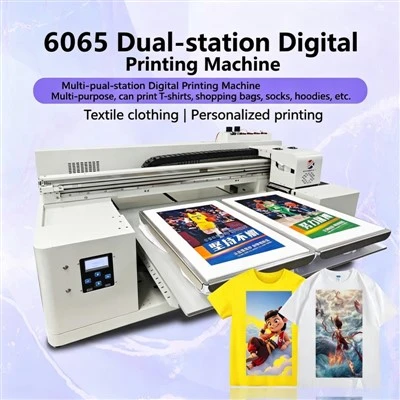
The early days of digital inkjet (let’s say the 1980s to early 2000s) were defined by two key limitations: speed and print quality. Back then, most inkjet printers relied on thermal or piezoelectric printheads that could only spray a single, small droplet, which made them slow for large jobs and prone to smudging if the material was even slightly porous. I remember my first exposure to the technology in 2001, when I was working for a small print shop in Chicago that traded its aging analog offset press for a 36-inch wide-format inkjet. That machine could crank out a 4-foot banner in about 10 minutes, which was a massive upgrade from the 2 hours we’d spent on offset before. But the tradeoff was obvious: colors were dull compared to offset, fine text would blur if we tried to print at maximum resolution, and the machine only worked on specialty vinyl—not fabric, paper, or even the basic cardstock we used for business cards.
The turning point came around the mid-2000s, and it centered on printhead innovation. Piezoelectric printheads, which use a crystal to push ink out instead of heat, started to improve. Early piezoelectric heads were inconsistent—some would spray too much ink, others would clog if not cleaned daily—but by 2007, manufacturers had refined the design to deliver variable droplet size: tiny droplets for fine detail, larger ones for solid color fills. That was a game-changer. Suddenly, we could print a 12-point font clearly on regular paper, and a gradient graphic for a store sign that looked indistinguishable from offset. Around the same time, UV-curable inks went mainstream. These inks don’t dry with air—they cure instantly under a UV light, which meant they could stick to almost any surface: metal, glass, wood, even plastic bins. Before UV inks, we’d have to prime every non-porous surface, which added time and cost to jobs. Now, a shop could print a custom logo on a stainless steel cooler in one pass, no priming needed. For small businesses, that meant they could offer products they never could before—like custom drinkware or retail displays—without investing in multiple specialized machines.
By the 2010s, the evolution shifted from print quality and material compatibility to workflow efficiency. Too many print shops were still operating with clunky, outdated software that required hours of prepping files for each job. A customer would send a logo as a JPG, and the team would have to adjust colors, fix resolution, and resize the file manually just to get it to print correctly. We started seeing printers integrate with cloud-based design tools and prep software in 2012, which let shops pull files directly from a customer’s Google Drive or Canva account, auto-correct color to match a brand’s Pantone specifications, and even estimate print time and cost in real time. That cut job prep time by 70% for many of our clients—for a small shop that used to book 10 jobs a week, that jump to 25 was transformative. We also saw inks get more durable: scratch-resistant, fade-resistant, and even food-safe inks, which opened doors to packaging and food service labeling, a segment that had long relied on flexographic printing. For example, a craft brewery we work with now prints custom labels on their beer cans digitally, in runs as small as 500, instead of ordering 10,000 labels they’d have to store and use over months. That’s flexibility that wasn’t possible a decade ago.
Today, we’re in the era of integration and on-demand production, and the most exciting part is how printers are no longer standalone machines. Modern digital inkjet printers connect to a shop’s entire operation: inventory management, customer relationship management (CRM) tools, and even e-commerce platforms. A print shop that runs our latest model can accept a custom print order through its website, the order automatically sends to the printer, the system checks if the shop has the right materials, and the job is printed, cut, and shipped—all without a single manual step. We’ve also made huge strides in speed, without sacrificing quality. Our mid-range industrial printer, introduced last year, can print a 10-foot banner in 90 seconds, at 1440 DPI, which is faster than many offset presses for small to mid-sized jobs. That’s important because brands now want custom content fast—think a pop-up shop that needs a new backdrop in 24 hours, or a retail chain that needs 50 localized window graphics for different locations. Analog printing can’t match that speed for low-volume runs; it requires setup, plates, and minimum order quantities that make it uneconomical for runs under 1,000 pieces.
Of course, there are still challenges, and I see them firsthand every day when I meet with clients. One of the biggest is material compatibility—even with UV inks, some specialty materials, like thin stretch fabric or heat-sensitive vinyl, require customized settings that not all printers can handle. Another is ink cost, which can be 20-30% of a shop’s total operating expenses. That’s why we’ve invested heavily in ink recycling systems: our latest models capture unused ink, filter it, and reuse it in subsequent jobs, cutting ink waste by 40%. We also offer training programs for clients to help them optimize their ink usage, like adjusting droplet size for specific jobs to avoid over-squirting ink. A lot of people think digital inkjet is just “print faster,” but it’s also about reducing waste, which is a big win for both small businesses looking to cut costs and brands that want more sustainable practices.
Looking ahead, the next evolution is likely to be even more tied to digital transformation. We’re already testing printers that can print 3D elements—think a custom packaging box with a raised logo or a textured graphic that you can feel—by combining inkjet with a thin layer of adhesive that cures to form texture. We’re also working on inks that are fully biodegradable, so print shops can offer eco-friendly products without sacrificing quality. For small businesses, this means that digital inkjet won’t just be for signs and banners; it’ll be for everything from custom clothing to limited-edition product packaging, all in small runs.
If you’re a print shop owner, brand manager, or small business looking to invest in digital inkjet, the key is to look beyond just price tags. The best technology for you depends on the types of jobs you do: if you’re mostly printing window graphics and banners, a mid-range wide-format printer with UV ink might be perfect. If you’re doing packaging or labeling, a high-resolution, compact digital inkjet printer that integrates with your e-commerce platform will save you time and money. The goal is to find a system that grows with your business, not just meets your current needs.

If you’re ready to explore your options or discuss a custom solution for your production needs, reach out to our team to connect with a sales representative and schedule a walkthrough of our latest models. We can walk you through case studies of similar businesses that have improved their turnaround times, reduced waste, and expanded their service offerings with the right digital inkjet technology.
UV Flatbed Printer References
- Digital Print Industries. (2022). “Global Digital Inkjet Printer Market: Trends, Growth, and Forecast 2022-2028.” Industry Analysis Report.
- Smith, L. (2021). “Inkjet Technology Evolution: From 2D to 3D Printing, Key Milestones and Future Directions.” Journal of Digital Printing Technology.
- Print Services Association of North America. (2023). “2023 Print Industry Benchmarks: Efficiency, Waste Reduction, and Ink Usage Trends.”
Shenzhen Guangyin United Technology Co., Ltd.
With abundant experience, we are one of the most professional digital inkjet printer manufacturers in China. If you’re going to buy high quality digital inkjet printer made in China, welcome to get quotation from our factory. For price consultation, contact us.
Address: 2nd Floor, Building 7, No.3, Liulian Community, Pingdi Subdistrict, Longgang District, Shenzhen, China
E-mail: guangyinlianhe@gmail.com
WebSite: https://www.chinauvprinter.com/
