Hey there, folks! As a supplier of abrasive polishing wheels, I often get asked this question: "Can an abrasive polishing wheel be used for stone polishing?" Well, let’s dive right into it and find out. Abrasive Polishing Wheel
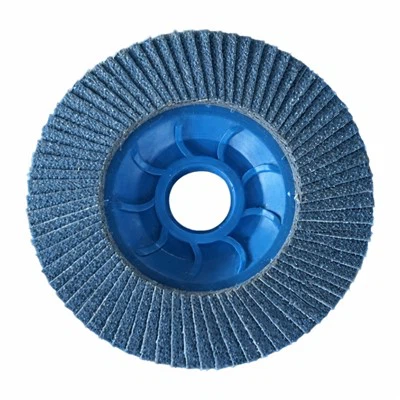
First off, let me give you a bit of background on abrasive polishing wheels. These wheels are made up of abrasive materials, like diamonds, silicon carbide, or aluminum oxide, bonded together to form a wheel. The abrasive particles are what do the actual work of grinding and polishing. Different types of abrasives have different hardness levels and cutting abilities, which makes them suitable for different materials.
Now, when it comes to stone polishing, the answer is a big yes! Abrasive polishing wheels are actually one of the most commonly used tools for this job. Stones come in all shapes, sizes, and hardness levels, from soft marble to super – hard granite. And the great thing about abrasive polishing wheels is that they can be customized to handle different types of stones.
For softer stones like marble or limestone, we usually recommend a polishing wheel with a comparatively lower – grit abrasive. A lower – grit abrasive means the particles are larger, and they can remove material more quickly. This is useful for the initial shaping and rough polishing of the stone. For example, if you’ve just cut a piece of marble and need to smooth out the rough edges and surfaces, a 100 – 200 grit abrasive polishing wheel would be a good choice. These wheels can quickly get rid of the saw marks and give the stone a more even surface.
On the other hand, when dealing with harder stones like granite, we need a higher – grit abrasive. Granite is extremely hard and dense, so it requires more aggressive cutting and polishing. A higher – grit wheel, say around 400 – 800 grit, has smaller abrasive particles. These particles work more slowly but can create a finer finish. After the initial roughing with a lower – grit wheel, using a higher – grit wheel will start to bring out the natural shine in the granite.
One of the key advantages of using abrasive polishing wheels for stone is the control they offer. You can adjust the pressure, speed, and angle of the wheel to achieve the exact finish you want. Whether you’re looking for a high – gloss mirror finish or a more matte, textured look, the right abrasive polishing wheel can help you get there. For instance, if you want a high – gloss finish on a granite countertop, you’ll start with a lower – grit wheel to shape the surface, then gradually move up to higher – grit wheels. The final step might involve using a very high – grit wheel, like 1500 – 3000 grit, to really bring out that mirror – like shine.
Another benefit is the efficiency. Abrasive polishing wheels are designed to work quickly and effectively. They can cover a large area of stone in a relatively short time compared to some other polishing methods. This is especially important for commercial projects where time is of the essence. For example, if you’re working on a large – scale building facade made of stone, using abrasive polishing wheels can significantly reduce the overall project time.
However, it’s not all sunshine and rainbows. There are some things you need to keep in mind when using abrasive polishing wheels for stone. First of all, safety is a must. These wheels spin at high speeds, and the abrasive particles can fly off, so wearing proper safety gear like goggles, gloves, and a dust mask is non – negotiable. Also, you need to make sure the wheel is properly mounted and balanced on your polishing machine. An unbalanced wheel can cause uneven polishing and even damage to the stone.
Secondly, you have to be careful about the type of stone you’re working with. Some stones are more porous than others, and using the wrong abrasive or polishing technique can cause staining or damage. For example, marble is a porous stone, and if you use a wheel with the wrong abrasive or don’t clean it properly during the polishing process, it can absorb dirt and stains.
In addition, you need to maintain your abrasive polishing wheels. Over time, the abrasive particles will wear down, and the wheel will lose its effectiveness. You can usually tell when a wheel needs to be replaced when it starts to take longer to achieve the same level of polish or when the finish starts to look uneven.
So, to sum it up, abrasive polishing wheels are definitely a great option for stone polishing. They offer versatility, control, and efficiency, but you need to use them correctly and take proper precautions.

If you’re in the market for abrasive polishing wheels for your stone – polishing projects, whether it’s for a small DIY job at home or a large – scale commercial venture, I’m here to help. We have a wide range of abrasive polishing wheels in different grits and sizes to suit all your needs. We can also provide advice on the best wheel for your specific type of stone and project. Don’t hesitate to reach out to me if you have any questions or want to discuss your requirements. I’m always happy to have a chat and find the perfect solution for you.
Flap Disc References:
"Handbook of Stone Processing Technology"
"Advanced Abrasives in Manufacturing and Material Processing"
Henan Yandisc Hardware Tools Co., Ltd.
As one of the most professional abrasive polishing wheel manufacturers and suppliers in China, our products have good reputation in the market. Please feel free to wholesale high quality abrasive polishing wheel made in China here from our factory. Customized orders are welcome.
Address: Zinan Road, High-tech Industrial Development Zone, Zhengzhou, Henan, China
E-mail: info@yandisc.com
WebSite: https://www.yandisc.com/
