What’s the Effect of Iron and Manganese on Reverse Osmosis Membranes? Reverse Osmosis Membranes

Hey there, if you’re running a water treatment system—whether it’s for a manufacturing plant, a municipal water facility, or even a commercial site—you’ve probably dealt with weird gunk building up on your reverse osmosis (RO) membranes before. I’m here to tell you, iron and manganese are two of the sneakiest culprits that ruin RO performance, and I see this stuff every single day as an RO membrane supplier. A lot of new operators think these just “clog pipes” but nope, they attack RO membranes in way more permanent, expensive ways. Let’s break this down like I would with a customer calling me at 3 p.m. panicking because their system’s production dropped 40% overnight.
First, let’s get the basics straight for anyone who’s new to this. RO membranes work by forcing water through a tight semipermeable layer, letting clean H2O pass through and trapping all the bad stuff—dissolved salts, heavy metals, organic gunk, you name it. Now iron and manganese are naturally occurring heavy metals found in groundwater most places, right? They’re also super common in surface water that’s been contaminated by runoff from construction sites, old plumbing, or even industrial discharge. The thing is, in their dissolved state (like Fe²+ and Mn²+), they look totally harmless—you can’t even see them, the water might be clear. But once they hit your RO system, that’s when the trouble starts, and it’s not just about a little pressure drop.
Let’s start with iron first because it’s way more common in most of the systems I service. Dissolved iron is reduced (Fe²+) in low-oxygen water, which is typical of deep groundwater that a lot of plants use for treatment. When this hits the RO membrane, two things can happen—depending on if there’s oxygen present before the membrane, or on the membrane surface. If there’s any oxygen in the feed water, or even just trapped on the RO membrane’s active layer, Fe²+ oxidizes really fast, turning into insoluble Fe³+ (that’s rust, basically). That rust particles are tiny, but they stick right to the membrane’s surface.
Wait, but here’s the part most operators miss: it’s not just surface clogging. If iron keeps building up, it can actually embed itself into the membrane’s pores, not just sit on top. I’ve seen this so many times—customers try to do a quick flush with a high-pressure pump to knock off the gunk, and half the iron is already wedged into the pores. That permanently reduces the membrane’s permeability, meaning it can’t pass as much water even after cleaning. Worse, iron acts like a glue for other foulants. Organic matter, bacteria, even manganese will stick to that rust layer on the membrane, turning a small iron problem into a full-on biofouling nightmare in a matter of weeks. I had a food and beverage customer last year who tried to skip a pre-treatment filter to save a few bucks, and their RO membranes had a thick rust-brown slime on them within 6 months. They had to replace 12 membranes—cost them over $15k—all because they didn’t account for dissolved iron.
Manganese is a different beast, but just as bad, if not worse in some cases. Dissolved manganese (Mn²+) is even harder to oxidize than iron, so it stays dissolved longer in feed water unless there’s a specific oxidizer present, like chlorine or potassium permanganate added pre-treatment. When manganese does oxidize, it forms manganese dioxide (MnO2)—that’s a dark, gritty, almost black substance. The cool (read: not cool) thing about MnO2 is that it’s super abrasive, way more abrasive than iron oxide. So when that grit sticks to the membrane surface, or gets caught in the feed spacer of the RO element, it’s like having tiny sandblasters running 24/7. Over time, that abrasive layer scratches and tears the membrane’s thin active layer. The active layer is what makes the membrane separate clean water from contaminants—if it’s scratched, the membrane loses its salt rejection rate. I can’t tell you how many times I’ve gotten a call from a water utility that had 98% salt rejection membranes dropping to 92% because of manganese abrasion, and they thought it was “normal membrane wear” until we tested the foulant and found MnO2.
Another trick iron and manganese pull: biofouling. Bacteria love to feed on these metals—iron-oxidizing bacteria (like Gallionella) and manganese-oxidizing bacteria use Fe²+ and Mn²+ as an energy source. Those bacteria grow in slimy biofilms that cover the membrane, and they trap even more metals and organic matter. The biofilm also creates a barrier that makes it almost impossible for your normal membrane cleaning chemicals (like citric acid or caustic) to reach the iron or manganese deposits. So you can run a 2-hour CIP (clean-in-place) cycle and still get only 50% of the foulant off, because the bacteria slime is protecting the metal layers. I recommend customers test for both total iron and total manganese at least once a quarter, and if they have more than 0.1 ppm of iron or 0.05 ppm of manganese, they need to adjust their pre-treatment.
Wait, let’s talk about something specific to RO systems that a lot of people don’t know: the pH level makes a huge difference here. Iron oxidizes fastest at a pH of around 7-8, which is super common in most water sources. Manganese oxidizes best at a higher pH, like 8.5 or above, but some oxidizers will kick it off at lower pH if you dose the right amount. I’ve seen customers mess this up all the time—they add chlorine to oxidize iron, but not enough, so half the iron stays dissolved, and the manganese still gets through. Then they run their system at too low a pH, so the iron particles stay small and hard to filter out before the RO. The result is even more foulant on the membranes.
Now, how does this compare to other common RO foulants, like scaling from calcium or silica? Iron and manganese are worse because they’re not just a layer that can be chemically cleaned off most of the time. If you get iron embedded in the pores, or manganese scratching the active layer, that’s permanent damage. Scaling can usually be dissolved with acid cleaning, but metal fouling often requires replacing the membrane if it’s left too long. That’s why pre-treatment is non-negotiable here. The cheapest way to deal with iron and manganese on RO membranes is not to clean the membranes after they get fouled—it’s to remove those metals before they even reach the RO elements.
What’s the common pre-treatment that works? First, aeration for iron and manganese, since aeration adds oxygen to oxidize the dissolved metals. Then a media filter, like a manganese greensand filter, which is specifically designed to catch oxidized iron and manganese particles. Some systems also use a softener if the metals are present with high hardness, to prevent scaling plus metal fouling. I also recommend adding a small amount of oxidant, like chlorine, to the feed water before the filter—just enough to get the dissolved metals to oxidize, not so much that it damages the RO membrane (most thin-film composite RO membranes can only handle up to 0.1 ppm free chlorine, so you have to dechlorinate before the RO if you add more).
Wait, let’s get real with some numbers here. A standard RO membrane from a decent manufacturer should last 3-5 years with proper operation. I’ve seen customers with high iron/manganese and bad pre-treatment go through membranes every 12-18 months. That’s a 300% increase in replacement costs, not to mention the downtime when you have to take the system offline to swap out elements. A lot of small to mid-sized operations think “oh, it’s just a little iron, no big deal” until their production drops, their energy bills go up (because the system has to work harder to push water through fouled membranes), and their water quality fails testing.
Let me share a recent example that’s stuck with me. A car wash client contacted me 6 months after installing a new RO system. They were getting 50,000 gallons per day of production, down to 28,000. Their salt rejection had dropped from 99% to 91%, and when I tested the foulant from their membranes, it was 62% iron oxide, 18% manganese dioxide, and the rest organic bacteria slime. Turns out they used a well with 0.8 ppm iron and 0.2 ppm manganese, and their pre-treatment was just a 5-micron cartridge filter—totally useless for dissolved metals. We hooked them up with a manganese greensand filter, adjusted their aeration to get the metals to oxidize properly, and their membrane production bounced back to 47,000 gallons. We recommended they replace 2 of their worst membranes, and now they’re on track to get 4 years out of the rest. That’s the difference between doing it right and cutting corners.
Another thing to mention: if you’re already dealing with iron or manganese fouling, what can you do in the short term? First, stop feeding any more of the metal—so fix your pre-treatment immediately. Then, a good membrane cleaning: for iron fouling, citric acid at a pH of 3 is great for dissolving iron oxide. For manganese, you might need a stronger oxidizing cleaner, like oxalic acid, but you have to be careful with that because it can damage the membrane if left on too long. I always tell customers to run a small test on one membrane first before doing a full CIP, because every membrane brand is a little different. And never use bleach (chlorine) to clean RO membranes—we already talked about that, too much chlorine destroys the active layer.
Now, let’s address a myth I hear all the time: “if my water is clear, there’s no iron or manganese.” No way. Dissolved iron and manganese are colorless until they oxidize. A well that’s crystal clear when you pump it might turn yellow or brown after a few minutes in a bucket because the iron is oxidizing from the air. That’s exactly what’s happening in your RO system—except it’s happening on the membrane surface, not in a bucket. So testing your feed water for total iron (not just dissolved) and total manganese is non-negotiable. I offer free water testing for all my customers, because I’ve seen too many people lose money because they assumed the water was fine.
At the end of the day, iron and manganese are two of the most problematic contaminants for RO membranes because they cause both physical clogging, chemical abrasion, and biological fouling—all of which lead to lower performance, higher costs, and shorter membrane life. The key is to catch them early, test regularly, and set up proper pre-treatment before they ever touch your RO elements. If you’re noticing your production dropping, salt rejection going down, or weird deposits on your membrane elements, don’t wait until you have to replace half your system.
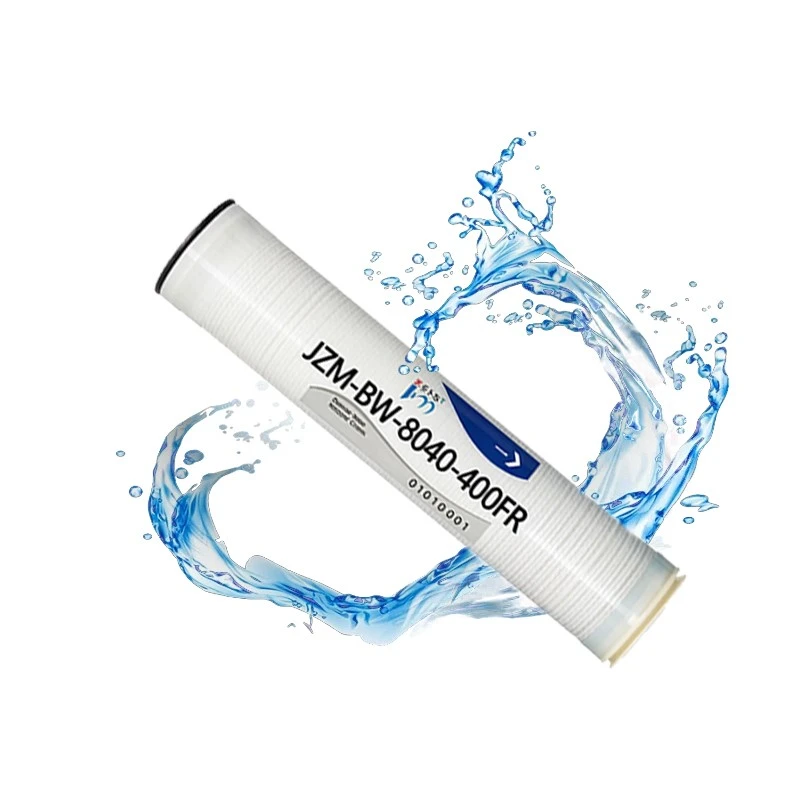
If you’re looking for ways to prevent metal fouling, or you need help troubleshooting an existing RO system that’s being wrecked by iron or manganese, hit me up. I work with all kinds of operations—small businesses, industrial plants, municipal facilities—and I can help you figure out the right pre-treatment and membrane setup for your specific water source. No sales pitch that’s too pushy, no fancy jargon, just straight answers that will save you time and money.
Reverse Osmosis Membranes References:
- "Reverse Osmosis Membrane Fouling: Causes, Prevention, and Cleaning". Water Research Foundation, 2019.
- Lachumy, S. J. Thiru, et al. "Iron and Manganese Fouling in Reverse Osmosis Systems: A Review". Desalination, vol. 435, 2018, pp. 187-198.
- "Corrosion and Fouling Control in Water Treatment Systems". American Water Works Association, 2021.
- Kim, J., et al. "Abrasion Effects of Manganese Dioxide on Thin-Film Composite Reverse Osmosis Membranes". Journal of Membrane Science, vol. 552, 2018, pp. 212-220.
Shandong Jinzhimo Environmental Protection Technology Co., Ltd.
As one of the most professional reverse osmosis membranes manufacturers and suppliers in China, we also support customized service. Please feel free to wholesale advanced reverse osmosis membranes in stock here from our factory. For pricelist, contact us now.
Address: Room 101, Building 9, Shangri-La, Jinlong Road, Zhaoyuan City, Yantai City, Shandong Province
E-mail: zhanglina0778@126.com
WebSite: https://www.sdjzmhb.com/
