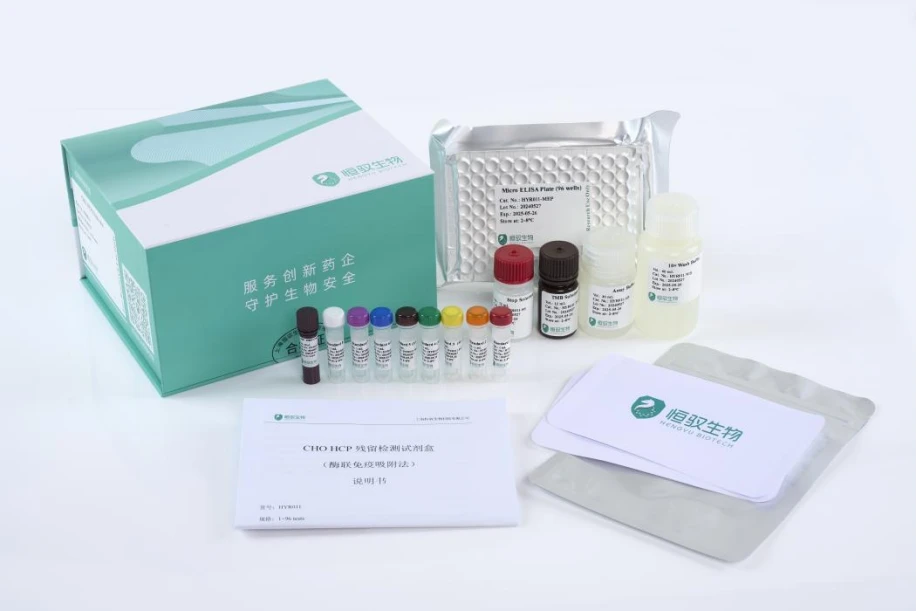
When I first started hearing from biotech labs across North America and Europe back in 2018, many were asking the same question: “Do I need to drop tens of thousands on new equipment just to test host cell residual DNA (HCD)?” As someone who’s spent the last six years building a company that makes HCD detection kits for biomanufacturers, academic labs, and contract research organizations, that question stuck with me—and it’s still one I answer at least once a week. I thought I’d break down what you actually need, what’s optional, and how to avoid the common pitfall of overinvesting in gear that doesn’t move the needle for your HCD testing work. Host Cell Residual DNA Detection Kits
Let’s start with the basics for anyone who’s not deeply knee-deep in bioprocessing HCD: residual DNA is the leftover genetic material from the cells used to make biologics—think Chinese hamster ovary (CHO) cells for monoclonal antibodies, E. coli for insulin, or even insect cells for viral vectors. The FDA, EMA, and other global regulators cap that residual DNA at 10 ng per dose for most biologics, and for cell and gene therapies, it’s often even stricter—down to picogram levels in some cases. So you need a test that’s sensitive, accurate, and reproducible, but the big debate is whether that test requires brand-new, specialized machinery.
Let’s talk about the core of most HCD kits on the market today: the most common and reliable method is quantitative polymerase chain reaction (qPCR). That’s not some mysterious technology—it’s the same qPCR you probably already use for other assays in your lab, like genotyping or viral load testing. When we design our HCD kits, we build them to work with existing real-time qPCR systems that most labs already own. Whether you’ve got a Bio-Rad CFX96, an Applied Biosystems QuantStudio 5, or even a more portable qPCR machine for field testing or smaller labs, our kits are validated on those platforms. I’ve had a lab with only a basic entry-level qPCR system reach out last year; they were nervous they’d have to upgrade, but they ran our kit on their existing gear for their next clinical batch, and passed their regulatory audit without a single hitch.
Wait, but hold on—what about next-generation sequencing (NGS) based HCD kits? Those do exist, and they’re growing in popularity for labs that need to profile the type of residual DNA, not just the total amount. A lot of gene therapy labs use NGS to check for integration of host cell DNA into the therapeutic product, for example. And yes, NGS does require specialized equipment: high-throughput sequencers, library preparation machines, and bioinformatics tools to analyze the data. But here’s the key point: NGS-based HCD testing is not required for most routine biomanufacturing. Regulators accept qPCR-based methods for total residual DNA quantitation as long as the kit is validated for your specific host cell line. So if your focus is routine quality control (QC) for monoclonal antibodies or recombinant proteins, you don’t need NGS equipment at all. That’s a mistake we see all the time—labs buying NGS gear because they think it’s “better,” but it’s overkill for their core testing needs.
Now, are there any cases where you do need special equipment for HCD kits? Let’s be honest—yes, but they’re narrow, specific cases, not the general rule. For example, some of our clients in high-throughput biomanufacturing, like those making biosimilars at scale, run hundreds of HCD tests a week. For that, they might use automated liquid handling systems to set up reactions faster, or microplate readers with fluorescence detection (which is what qPCR uses) to process plates in batches. But that’s not special equipment for HCD—it’s automated lab gear they already use for other high-throughput assays, like ELISA or cell viability testing. We work with these labs to optimize our kits for their automation workflows, but they’re not buying new equipment specifically for HCD testing.
Another case: labs that work with non-standard host cells. Let’s say you’re using a rare fungal host or a custom hybridoma line that most kits aren’t designed for. Our custom HCD kits for non-standard hosts might require a custom probe set, but you still run that on your existing qPCR system. The only time we’d recommend a new piece of gear is if you’re working at ultra-low residual DNA levels—like picogram per mL ranges for advanced cell therapies—and your existing qPCR system doesn’t have the sensitivity to pick up those small signals. Even then, most mid-tier qPCR systems from the last five years have enough sensitivity for that work. I had a client at a small gene therapy startup a couple of years ago with a 10-year-old qPCR machine that just couldn’t pick up picogram levels; we worked with them to optimize our assay protocol to reduce background noise, and they didn’t have to buy a new machine. That’s the kind of practical problem-solving we focus on, not pushing unnecessary upgrades.
I want to address a common misconception here: some HCD kit manufacturers will tell you that their kits only work with their own line of equipment. That’s a sales tactic, plain and simple. We’ve made a point of validating every one of our kit lines across 12+ different qPCR platforms, because we know labs don’t want to be locked into a single supplier’s gear. For example, our CHO Residual DNA qPCR Kit is validated on Bio-Rad, Applied Biosystems, Roche, and even smaller regional qPCR systems from companies like QIAGEN. That gives labs flexibility—if they have a mix of old and new equipment in different parts of their facility, they can use the same kit across all of them, no extra purchases needed.
Let’s also talk about supporting documentation, because that’s a big part of what makes an HCD test acceptable for regulators. A lot of new labs don’t realize that the validation data for the kit, not the equipment, is what the FDA and EMA audit. If your existing qPCR system is already on the list of validated platforms for the kit, that’s all you need. We provide full validation packages for every kit we sell—including limit of detection, limit of quantitation, precision, accuracy, and linearity data—so that when it comes time for an audit, you don’t have to prove that your equipment is special; you prove that the kit works on your existing equipment.
Now, let’s look at what might trip you up if you skip this due diligence. A few years back, I talked to a team at a mid-sized biotech that had just built a new manufacturing line. They bought a brand-new high-end qPCR system because they thought it was required, and ended up wasting $35,000 on gear that was way more sensitive than their testing needed. They could’ve run their HCD tests on their existing entry-level system, which was already validated for another assay in their QC lab. That’s a common error—equating newer, more expensive equipment with better test quality. In reality, the quality comes from the kit’s design and validation, not the model of the qPCR machine.
There is one category of HCD testing where special equipment is non-negotiable: digital PCR (dPCR) for absolute quantitation of ultra-low residual DNA. dPCR splits reactions into thousands of tiny partitions, so it can detect very small amounts of DNA without relying on standard curves, which makes it great for cell and gene therapy products where residual DNA levels are as low as 1 pg/mL. But dPCR systems are a step above standard qPCR, and they’re more expensive. Even then, though, it’s not mandatory. Regulators accept both qPCR and dPCR for residual DNA testing, so if your team doesn’t already have a dPCR system, you can stick to a validated qPCR kit and avoid that capital cost. We’ve had labs switch to dPCR only after they hit the lowest regulatory limits for their cell therapy, not as a first-line purchase.
Another angle: if you’re an academic lab running HCD tests for research, not clinical manufacturing, the bar is even lower. You might not need any specialized equipment at all, depending on your goals. Many academic labs use homebrew HCD assays, but our kits are designed to be plug-and-play, so you can get reliable, reproducible results without investing in anything beyond a basic qPCR machine that you might already use for other molecular biology work. I’ve had grad students message me saying they used our E. coli Residual DNA Kit on their university’s shared qPCR system for a lab project, and they didn’t have to pay a cent for new gear—they just booked a time slot on the shared machine. That’s the reality for most non-clinical labs.
So let’s wrap this up with a clear breakdown, based on what we’ve learned from thousands of labs over the last six years. For routine, regulated residual DNA testing for biomanufacturing (monoclonals, recombinant proteins, standard viral vectors): No, you do not need special equipment. All you need is a standard real-time qPCR system, which most labs already own. The kit’s validation and performance, not your equipment’s brand or price point, is what matters for regulatory compliance. For labs testing non-standard host cells or needing ultra-profiling of residual DNA (not just total quantitation): You may need NGS or dPCR equipment, but those are niche use cases, not general requirements. For high-throughput labs: You can use automated liquid handlers you already have, not dedicated HCD-specific gear.

If you’re at a point where you’re evaluating HCD detection kits, or you’re frustrated with overhyped equipment requirements from other suppliers, we’re here to help. We work with labs of all sizes—from small startups with entry-level qPCR systems to large global manufacturers with thousands of pieces of lab gear—to match our kits to their existing infrastructure, no unnecessary purchases required. We also provide full validation packages, technical support, and protocol optimization to make sure your HCD testing is reliable, compliant, and cost-effective.
Safety Detection Kits If you’re ready to discuss your specific testing needs, or you want to get a copy of our latest validation data for your host cell line, feel free to reach out for a no-obligation consultation. We’re here to answer your questions, cut through the jargon, and help you make the best choice for your lab, not push gear you don’t need.
References
- FDA. (2023). Guidance for Industry: Residual DNA, Residual Proteins, and Other Process-Related Impurities in Human Gene Therapy Products. U.S. Food and Drug Administration.
- European Medicines Agency. (2022). Guideline on Cell Line Development and Characterization for Biotechnology Products. European Medicines Agency.
- ICH. (2021). ICH Q2(R1) Validation of Analytical Procedures: Text and Methodology. International Council for Harmonisation of Technical Requirements for Pharmaceuticals for Human Use.
- Liu, Y., et al. (2020). Comparison of qPCR and NGS Methods for Quantitation and Profiling of Host Cell Residual DNA in Biologics. Biotechnology and Bioengineering, 117(8), 2345-2356.
- World Health Organization. (2019). Guidelines for the Quality, Safety and Efficacy of Cell-Based Medicinal Products. World Health Organization.
HyQure Biotech Co., Ltd.
As a professional host cell residual DNA detection kits enterprise in China and Switzerland, we rely on international compliance standards, leverages excellent quality and technical strength. If you have any enquiry about cooperation, please feel free to email us.
Address: Building 18, Lane 2777 East Jinxiu Road, Pudong New Area, Shanghai 2.Stücki Park Hochbergerstr. 60 I, 4057 Basel Switzerland
E-mail: service@hyqure.com
WebSite: https://www.hyqure.com/
