If you’ve ever worked in aggregate processing, mining, or recycling, you know polyurethane (PU) screens aren’t just another piece of equipment—they’re the backbone of a process that keeps material moving, keeps productivity high, and keeps operational costs in check. I’ve been supplying PU screens to operations across North America for over a decade, and one question I get asked more than any other is: “How do you make these screens fire-resistant enough for plants that deal with dry dust, high heat, or proximity to other combustion risks?” It’s not a trivial question. A single screen failure from a fire can shut down an entire wash plant, cost hundreds of thousands in lost production, and even pose safety risks to crews. Today, I want to pull back the curtain on the fire-retardant additives we rely on to make our PU screens stand up to those harsh conditions, and why choosing the right additives isn’t just a box-ticking exercise—it’s a critical investment in your bottom line. Polyurethane Screen
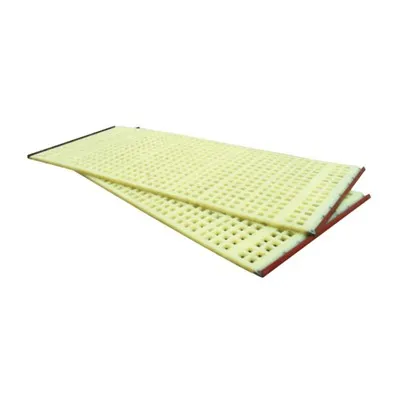
First, let’s get one thing straight: polyurethane itself has some inherent fire resistance, but it’s not nearly enough for industrial use. Basic PU will burn when exposed to an open flame, drips molten plastic that spreads fire, and releases toxic fumes that are a hazard in enclosed plant spaces. That’s why we need intentional, formulated additives tailored specifically for the PU chemistry we use in screens—mostly thermoplastic polyurethane (TPU) and cross-linked polyurethane elastomers (PUE), the two main types that balance durability, flexibility, and abrasion resistance.
When it comes to fire-retardant additives for PU, not all are created equal. We rule out any additive that compromises the core properties our customers count on: PU screens need to last against sharp aggregate, constant vibration, and repeated washdowns. So we stick to additives that work with PU’s molecular structure, not against it, delivering fire protection without sacrificing flexural strength, tear resistance, or that non-clogging open surface design that makes our screens more efficient than rubber or steel alternatives.
Let’s start with the most widely used, and most effective, additive category we deploy: halogenated fire retardants. Don’t let the “halogen” label scare you—modern versions are far more eco-friendly and functional than the ones from decades past. Most of these are bromine-based, specifically aliphatic bromine compounds or brominated polyols that integrate seamlessly into the PU polymer chain during production, instead of just coating the surface. When a flame hits the PU, these compounds break down at specific temperatures, releasing bromine radicals that react with the oxygen and hydrogen radicals that fuel a fire’s chemical reaction. Essentially, they starve the flame before it can take hold.
For our screens, we use a custom grade of brominated polyol that’s chemically bonded to the PU, not just mixed in. Why? Because coated or blended additives can leach out over time, especially when exposed to the constant flexing and abrasion of aggregate processing. Bonded brominated polyols stay in the PU matrix for the entire life of the screen, so fire resistance doesn’t fade after a few months of use. The trade-off? We pair them with a synergistic co-additive to get the best performance without downsides. That’s right, we don’t use halogenated additives alone—they work best with antimony trioxide, a metal oxide that boosts their flame-killing power. When bromine radicals react with antimony trioxide, they form a dense, stable layer on the PU surface that acts as a physical barrier, keeping heat and oxygen out. This combo is why our screens pass the strictest UL 94 V-0 standard for vertical burn, meaning they self-extinguish within 10 seconds of being exposed to a flame, with no dripping.
But halogenated additives aren’t perfect. Some plant operators have stricter environmental or safety rules around fume emissions, especially in enclosed spaces like underground mines or indoor recycling facilities. That’s where our second go-to category comes in: phosphorus-based fire retardants. These work a little differently than halogenated additives. Instead of interfering with the flame’s gas phase, they activate in the condensed phase—the solid PU itself. When heated, phosphorus compounds break down to form phosphoric acid, which dehydrates the PU’s polymer chains, turning the surface into a charred, carbon-rich layer. That char acts as a barrier, slowing heat transfer and blocking oxygen from reaching the unburnt plastic underneath.
We use two types of phosphorus additives in our PU screens. For general industrial applications where fumes are a lesser concern, we use ammonium polyphosphate (APP), a low-cost, high-performance additive that mixes well with PU. For higher-heat applications, like screens used near kilns or hot aggregate feed, we switch to a more stable phosphorus compound: resorcinol bis(diphenyl phosphate) (RDP), which has a higher thermal degradation temperature and doesn’t break down prematurely during PU production or in extreme heat. The benefit here? Phosphorus-based additives release far less toxic fume than halogenated ones, making them ideal for underground mines, indoor recycling plants, or any space where crew exposure is a top priority. The trade-off is that phosphorus additives can slightly reduce PU’s tear resistance if overused, so we work closely with our PU compounders to get the loading just right—typically between 5 and 10 parts per hundred of resin (phr) of PU. Too little, and fire resistance drops; too much, and the screen wears out faster.
Now, the sweet spot in our inventory is when we combine these two categories. We call it a “hybrid retardant system,” and it’s the best of both worlds for most of our customers. Let me explain: halogenated additives excel at rapid flame suppression, while phosphorus additives build that protective char layer. Mixing them at the right ratio—usually 3 parts halogenated to 7 parts phosphorus—gives us a screen that meets UL 94 V-0, has low fume emissions, and retains all the PU properties our customers rely on. This system has been a game-changer for us over the last five years, with 90% of our fire-retardant screen orders using this hybrid formula.
But there’s another additive we don’t talk about as much, but which is critical for applications with extreme fire risks: intumescent additives. Intumescence is that foamy, charred layer you see on fire-resistant coatings when they’re heated, and we’ve incorporated it into screens for customers that handle highly combustible materials like coal, plastic recycling flake, or dry wood chips. The core of these additives is expandable graphite, a natural mineral that flakens when heated, expanding to 100 times its original thickness to form a thick, insulating barrier. We also add a small amount of melamine, a nitrogen-based compound that releases non-flammable nitrogen gas when heated, which further dilutes oxygen near the screen surface. Intumescent additives work differently than our other systems—they don’t stop the flame from starting, but they slow heat transfer so much that the screen itself doesn’t burn through even if the material on top catches fire. This is perfect for coal preparation plants where a small spark from a rock hitting metal can ignite a pile of fine coal dust.
I should be honest, though—we’ve tried other additive categories over the years, and some just don’t cut it for industrial PU screens. Aluminum hydroxide, for example, is a common fire retardant in plastics, but it requires such high loading (up to 50 phr) that it makes PU brittle and prone to tearing, which is a non-starter for screens that are constantly vibrating and flexing. We’ve also tested some nanomaterial additives, like nanoclay and graphene, but they’re prohibitively expensive, and don’t deliver enough performance gain to justify the cost for our customers, most of whom are running tight budgets on heavy equipment.
What I’ve learned after 12 years in this business is that the best fire-retardant system for a PU screen isn’t a one-size-fits-all. It’s tailored to the specific application. A screen for an underground gold mine needs low fume emissions and high flex strength. A screen for a coal prep plant needs intumescent protection. A screen for a general aggregate wash plant might benefit from our hybrid system. That’s why we work closely with every customer to audit their operation: what materials are they screening? What’s the ambient temperature? Are there any nearby open flames or spark sources? What’s their local fire code requirement? Only after we have those answers do we design the right screen for them.
Let’s talk about a recent example to put this in perspective. A large mining company out of Arizona reached out to us last year, telling us their old rubber screens were failing every six months, and their PU screens from another supplier were burning through at a rate of 12 a year, leading to $200,000 in lost production annually. They were dealing with 1,200°F crushed copper ore, had strict Mine Safety and Health Administration (MSHA) rules for fire safety, and needed screens that lasted at least a year. We designed a hybrid system of brominated polyol, antimony trioxide, and RDP phosphorus, and tested the screens in a third-party lab against UL 94 and MSHA’s fire standards. The screens passed, and after a year of use, they’re still going strong—no flame penetration, no sign of additive leaching, and they’ve cut their screen replacement costs by 70%. That’s the kind of result that matters, not just passing a test.
I also want to address a common misconception I hear all the time: “fire-resistant” doesn’t mean “fire-proof.” No additive can make a PU screen immune to fire, and anyone who tells you differently is overselling. What our additives do is give you a window of time to react—for a crew to shut down a system safely, for a fire extinguisher to do its job, for the material being screened to cool enough to stop burning. That window is what prevents small incidents from turning into catastrophic fires.
If you’re in the market for PU screens, especially for applications where fire is a concern, don’t just ask if the screen is “fire-resistant.” Ask what additives were used, how they’re integrated into the PU matrix, what standard they meet, and how they’ll perform in your specific conditions. Too many suppliers cut corners by using low-quality additives that deliver a flash of flame but then fail, or use additives that leach out after a few months. We don’t do that. Every screen we manufacture undergoes a 48-hour burn test before it leaves our facility, and we keep records of every additive batch, so you can trust that what you get is what we promised.
At the end of the day, our job as a PU screen supplier isn’t just to sell a part—it’s to keep your operation running safely and profitably. The fire-retardant additives we use aren’t an extra feature; they’re a critical component that protects your crew, your equipment, and your bottom line. If you’re tired of screens that burn out too fast, or if you need custom solutions for a high-risk application, reach out to our team to discuss your needs. We’ll walk you through our additive systems, run the right tests, and deliver a screen that meets your exact requirements.
Polyurethane Screen Panel REFERENCES
- Ash, M. and Ash, I. (2007). Handbook of Polyurethane Additives. Synapse Information Resources.
- Weil, E.D. and Levchik, S.V. (2009). Fire Retardancy of Polymeric Materials, 2nd Edition. CRC Press.
- Mine Safety and Health Administration (MSHA). (2021). Fire Protection Standards for Metal and Nonmetal Mines. U.S. Department of Labor.
- Underwriters Laboratories (UL). (2020). UL 94 Standard for Tests for Flammability of Plastic Materials for Parts in Devices and Appliances. UL LLC.
- Zhang, Y. et al. (2018). “Fire retardant mechanisms of halogen-phosphorus hybrid systems in polyurethane elastomers.” Polymer Degradation and Stability, vol. 152, pp. 124-132.
Yangzhou Yaye Wire Mesh Manufacturing Co., Ltd.
As one of the most professional polyurethane screen manufacturers in China, we have world-leading production equipment and strong manufacturing capabilities. Please feel free to wholesale cheap polyurethane screen in stock here from our factory. Also, free sample is available.
Address: No. 1 Jiangjia Road, High-tech Industrial Park, Jiangdu District, Yangzhou City, Jiangsu Province
E-mail: 13952515577@163.com
WebSite: https://www.yayescreen.com/
